Table of Contents
- What Is Polarized Sunglasses Meaning, Exactly?
- Polarized Lenses vs Non-Polarized: The Key Differences
- The Pros and Cons of Polarized Sunglasses
- Are Polarized Sunglasses Better for Driving?
- Polarized vs Non Polarized: Which Is Better for Your Lifestyle?
- Why Women Who Wear Sunglasses All Day Love Polarized Lenses
- Discover Anea Hill's Polarized Sunglasses
- Frequently Asked Questions
- FAQs
If you have ever stood in a sunglass boutique (or spiraled down an online product page at midnight, no judgment) asking yourself whether polarized lenses vs non actually makes a difference, you are not alone. It is one of the most common questions I hear from the ANEA HILL community, and honestly, it is a great one to ask before spending good money on a pair of frames.
So let's settle it, once and for all, the way a founder who built a luxury eyewear brand specifically because of her own eye sensitivity would: with real talk, actual science, and zero unnecessary jargon.
What Is Polarized Sunglasses Meaning, Exactly?
Before we get into the full polarized lenses vs non debate, let's define what we are actually talking about. Polarized sunglasses meaning, in the simplest terms: lenses that contain a special chemical filter designed to block horizontally oriented light waves, also known as glare. If you want to see what that looks like in a beautifully crafted frame, our Lonestar Sunglasses are a great place to start.
When sunlight bounces off flat surfaces like water, roads, car hoods, or even wet pavement, it scatters in a way that is harsh and disorienting to the eye. Polarized lenses contain a vertical filter layer that intercepts those light waves before they reach your eyes. The result is a noticeably cleaner, calmer visual field, like switching from a grainy old TV to a high-definition screen. If you want to go deeper on how lenses protect your eyes from the sun overall, our guide on the best sunglasses for UV protection is a great next read.
Non-polarized lenses, by contrast, simply reduce the overall amount of light that enters the eye through tinted or coated lenses. They are effective, they are stylish, and they absolutely have their place, but they do not specifically target glare the way polarized lenses do.
Polarized Lenses vs Non-Polarized: The Key Differences
When you are comparing polarized lenses vs non, there are a few areas where they diverge in ways that will genuinely affect your day-to-day experience.

Vineyard

$398.00
Nestled in the rolling hills of France's renowned wine country, the Burgundy region whispers of timeless elegance and refined taste. Inspired by this rich heritage, our Burgundy Collection introduces three pairs of sunglasses that capture the essence of sophisticated style.… read more
Glare Reduction and Visual Clarity
This is the biggest functional difference. Polarized lenses are engineered to eliminate glare. If you have ever squinted behind a pair of regular sunglasses while driving toward the afternoon sun, you know exactly what non-polarized lenses are missing. Polarized lenses cut through that blinding reflection like a hot knife through butter.
Non-polarized lenses reduce brightness overall, but they do not discriminate between types of light. That harsh, reflective glare from a windshield? Still getting through.
UV Protection: Does Polarization Equal Sun Protection?
Here is a common misconception worth clearing up when discussing polarized vs non polarized sunglasses UV protection: polarization and UV protection are two completely separate features. You can have a pair of non-polarized lenses that offer full UV400 protection (the gold standard for blocking both UVA and UVB rays), and you can also have polarized lenses that do not offer adequate UV protection. It is one of the biggest surprises women discover when they start understanding what they are actually paying for in a quality pair of sunglasses.
ANEA HILL lenses, polarized and non-polarized, are built with UV400 protection as a baseline. Because protecting your eyes is non-negotiable, darling.
Color Accuracy and Contrast
Polarized lenses tend to slightly alter color perception. Specifically, they enhance contrast and can make certain colors appear more saturated. For most activities, this is a welcome trade-off. For reading certain LCD screens or digital displays, it can create a darkening or rainbow-like distortion. More on that in a moment.
Non-polarized lenses preserve more natural color accuracy, which some people prefer for activities like photography or environments with lots of artificial lighting.
Lens Durability and Coating Quality
Whether you go polarized or non-polarized, what matters enormously is the quality of the lens material and its coatings. Cheap polarization peels. Cheap tints fade. ANEA HILL uses high-quality lens construction across both lens types, because a beautiful frame deserves an equally beautiful lens.
The Wind

$427.00
The Wind returns, reclaiming its crown as ANEA HILL's most coveted style. These luxury green sunglasses haven't been seen in years, and for good reason. Handcrafted in Japan from glossy green frame sunglasses, The Wind's design originated in Texas, resulting… read more
The Pros and Cons of Polarized Sunglasses
Let's lay it out clearly. If you are weighing the pros and cons of polarized sunglasses, here is the honest breakdown.
The Advantages of Polarized Lenses
The benefits are real and significant, especially if your lifestyle puts you outdoors or behind the wheel regularly:
Dramatically reduced glare from water, roads, and reflective surfaces. Improved visual comfort during long periods of wear, meaning less squinting and less strain. Enhanced contrast making shapes, textures, and edges appear sharper. Reduced eye fatigue over the course of a full day outside. Better depth perception in high-glare environments like open water or snowy landscapes. And when you pair all of that with lenses that also offer full UV400 protection, you are giving your eyes the most complete defense possible, which is exactly what we break down in our guide on sunglasses for UV protection.
If you have ever come home from a beach day with a splitting headache despite wearing sunglasses, polarized lenses may very well change your life. I say this from personal experience. My own eye sensitivity after LASIK surgery is literally the reason ANEA HILL exists.
The Disadvantages of Polarized Sunglasses
Being thorough here because you deserve the full picture. The disadvantages of polarized sunglasses are real, even if they are situational.
LCD screen interference is probably the most common frustration. Polarized lenses can make certain screens, such as your phone in landscape mode, a dashboard GPS, or an ATM display, difficult or impossible to read. Quality polarized lenses also cost more than basic tinted lenses because the optical technology is more complex to manufacture. They are not ideal for all sports either. Skiers, for instance, need to detect icy patches that can appear as bright reflections, and polarized lenses can mask that visual cue. And night driving is a hard no with polarized lenses, as they reduce light transmission and are completely unsuitable after dark.
Are Polarized Sunglasses Better for Driving?
The short answer is yes, during the day, emphatically yes. Are polarized sunglasses better for driving in daylight? Absolutely. Glare from oncoming cars, wet roads, and long stretches of direct sun is genuinely fatiguing and can be dangerous. ANEA HILL polarized lenses cut through all of that, giving you a clearer, calmer view of the road.
However, and this cannot be overstated, polarized sunglasses should never be worn for night driving. They reduce the amount of light reaching your eyes, which is the opposite of what you need after the sun goes down. If you are driving after dark, reach for a non-polarized pair, or ideally no tinted lenses at all.
For commuters, road-trippers, and anyone who spends meaningful time behind the wheel in daylight, polarized lenses vs non is not even a close competition. Polarized wins. If you want a frame that feels effortless for exactly this kind of everyday, in-and-out-of-the-car wear, our Sea Sunglasses are worth a look. The Sea is a smaller, refined metal frame that sits close to the face, making it one of those styles that transitions seamlessly from the driver's seat to wherever the day takes you without ever feeling like too much.

Sea

$384.00
Shimmer like the sun-kissed ocean with our Sea Sunglasses. This aviator features a stunning gold frame that reflects the warmth and brilliance of a summer day. The perfect statement piece to elevate your beachside look or add a touch of… read more
Types of Polarized Lenses: What Is Available
Not all polarized lenses are created equal. Understanding the types of polarized lenses vs non on the market helps you make a smarter purchase.
Standard 0.75mm polarized lenses are the entry-level option. They are functional and widely available, but thinner and more prone to distortion if quality control is poor. Premium 1.1mm polarized lenses offer superior optical clarity and durability. They perform noticeably better over time and are the standard for true luxury eyewear.
Lens tint matters just as much as thickness. Here is a quick guide to help you choose:
| Lens Tint | Best For | Visual Effect |
|---|---|---|
| Gray | Bright sun, open environments, beach | Most natural color perception |
| Brown / Amber | Driving, overcast days, everyday wear | Enhanced warmth and contrast |
| Green | Versatile all-day use | Good contrast with minimal color shift |
ANEA HILL is intentional about lens selection because the right lens inside the right frame is what makes an exceptional pair of sunglasses. Not just a pretty one.
Polarized vs Non Polarized: Which Is Better for Your Lifestyle?
Here is where the polarized lenses vs non comparison gets personal. There is no universally correct answer. It depends entirely on how you live.
Choose polarized lenses if you spend significant time driving during the day, are frequently at the beach, pool, or near open water, experience eye strain or headaches from light sensitivity, travel often and find yourself in varied high-glare environments, or simply want the most comfortable all-day outdoor experience.
Choose non-polarized lenses if you work primarily indoors and use sunglasses mainly for commuting, spend a lot of time in front of screens outdoors, ski or participate in winter sports where detecting ice matters, or need more accurate color reading for work like art, photography, or design.
And if you are like me, a little sensitive, always outdoors, and deeply particular about how things look and feel, you might want one of each. No one said you had to choose just once.
Estate Sunglasses

$413.00
Anea Hill Estate Sunglasses are designer shades that combine style and functionality, providing optimal eye protection for outdoor activities. This shape is popular for its bold and structured look, as it tends to complement facial features with more defined angles,… read more
Why Women Who Wear Sunglasses All Day Love Polarized Lenses
If comfort is your priority, and for anyone wearing sunglasses eight or more hours a day it absolutely should be, polarized lenses vs non has a clear winner for all-day wear. The absence of glare reduces the micro-squinting and visual processing effort your eyes are constantly doing, which translates to less eye fatigue, fewer tension headaches, and simply feeling better by the end of the day.
Pair that with a well-crafted frame that fits correctly (we design specifically for women with smaller faces, because not everyone's face is a standard size, a revelation when you find a brand that finally gets it), and all-day wear goes from a compromise to an actual pleasure. My current personal favorite for exactly this kind of wear is the Vintage in blue. There is something about that blue paired with denim and a white tee that just works every single time, the kind of effortless combination you reach for without thinking and feel completely pulled together in. If you are still exploring styles and want a fuller picture of what works for all-day wear, my best women's sunglasses guide is an honest breakdown of what I actually recommend and why.

Discover Anea Hill's Polarized Sunglasses
If you have made it this far in the polarized lenses vs non conversation and you are leaning toward polarized, I would love to introduce you to what we have built at ANEA HILL.
Every ANEA HILL frame is handcrafted from Italian cellulose acetate, a premium, biodegradable material that feels nothing like the plastic frames you have tried and forgotten. Our acetate is sourced and hand crafted from Japan, cut and assembled by hand over a months-long process, and designed specifically for women who take both comfort and aesthetics seriously.
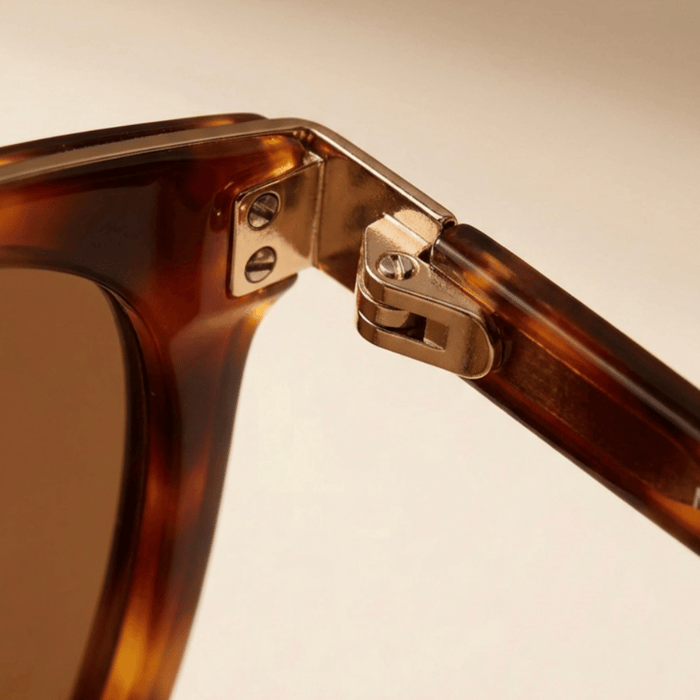
What sets us apart in the polarized lenses vs non sunglasses space: adjustable ear bars so your frames actually stay where you put them (a small detail that changes everything for all-day wear), Italian acetate that is lightweight, hypoallergenic, and ages beautifully, UV400 protection on every polarized lenses and non polarized alike, and founder-designed exclusivity because these are not mass-produced shapes. Every style was developed with intention.
We have been featured in Vogue, Harper's Bazaar, and Goop, not because we chased press, but because we built something genuinely worth writing about. And we are proud of that.
Browse our current polarized collection at ANEA HILL and find your pair.
Frequently Asked Questions
Can I tell if my sunglasses are polarized without any special equipment?
Yes, two easy tests. First, hold your lenses up to an LCD screen like a laptop or phone and rotate them 90 degrees. If the lenses darken significantly at a certain angle, they are polarized. Second, try looking at a reflective surface like a car hood in bright sunlight. Polarized lenses will noticeably reduce the glare while non-polarized lenses will not. At ANEA HILL, every polarized style is clearly labeled so there is never any guessing.
Is there a clear winner in the polarized lenses vs non debate for everyday city wear?
It depends on your routine, but for most urban women, polarized lenses vs non still tips in favor of polarized for daily wear. The visual comfort benefit is simply hard to give up once you have experienced it. The only real challenge is screen interference, which tends to be a bigger issue for women who work outdoors on devices. If that is you, a non-polarized lens in a chic neutral tint is a perfectly smart choice. ANEA HILL offers both, and our team is always happy to help you choose.
Do polarized lenses provide more UV protection than non-polarized?
Not automatically. Polarization and UV protection are independent features. A lens is polarized based on its glare-blocking filter, and UV-protective based on its coating or material. Full UV400 protection, which blocks 100% of UVA and UVB rays, should be a baseline expectation for any quality sunglass lens, polarized or not. All ANEA HILL sunglasses include UV400 protection regardless of whether they are polarized, because protecting your eyes is always the foundation.
ANEA HILL is a woman-owned luxury sunglass brand designed in Texas. All frames are handcrafted in Japanese, using Italian cellulose acetate and built for women who refuse to compromise on style or comfort. Explore the collection at aneahill.com.
FAQs
Can I tell if my sunglasses are polarized without any special equipment?
Yes, two easy tests. First, hold your lenses up to an LCD screen like a laptop or phone and rotate them 90 degrees. If the lenses darken significantly at a certain angle, they are polarized. Second, try looking at a reflective surface like a car hood in bright sunlight. Polarized lenses will noticeably reduce the glare while non-polarized lenses will not. At ANEA HILL, every polarized style is clearly labeled so there is never any guessing.
Is there a clear winner in the polarized lenses vs non debate for everyday city wear?
It depends on your routine, but for most urban women, polarized lenses vs non still tips in favor of polarized for daily wear. The visual comfort benefit is simply hard to give up once you have experienced it. The only real challenge is screen interference, which tends to be a bigger issue for women who work outdoors on devices. If that is you, a non-polarized lens in a chic neutral tint is a perfectly smart choice. ANEA HILL offers both, and our team is always happy to help you choose.
Do polarized lenses provide more UV protection than non-polarized?
Not automatically. Polarization and UV protection are independent features. A lens is polarized based on its glare-blocking filter, and UV-protective based on its coating or material. Full UV400 protection, which blocks 100% of UVA and UVB rays, should be a baseline expectation for any quality sunglass lens, polarized or not. All ANEA HILL lenses include UV400 protection regardless of whether they are polarized, because protecting your eyes is always the foundation.
Anea Hill is a woman-owned luxury sunglass brand designed in Texas. All frames are handcrafted from Japanese cellulose acetate and built for women who refuse to compromise on style or comfort. Explore the collection at aneahill.com.