Table of Contents
Part of why I started Anea Hill is because of the dreaded sunglasses headaches.
Not one headache. Years of them. Beautiful sunglasses that I genuinely loved the look of, worn for an hour, maybe two, before the dull pressure at my temples became impossible to ignore. I would take them off, toss them on the passenger seat, and spend the rest of the day squinting. Over and over again.
I assumed it was just how sunglasses felt. That discomfort was the trade off for wearing something beautiful. It took designing my own frames to realize that assumption was completely wrong.
Sunglasses headaches are not inevitable. They are almost always the result of a frame that was not designed with your actual face in mind. This post breaks down the science behind why it happens, what the research says about frame fit and pressure, and how every decision we make at Anea Hill is built around preventing exactly this problem.
Why Sunglasses Headaches Are So Common
If you have ever taken off a pair of sunglasses midway through the day because your head was starting to pound, you are in very large company.
Sunglasses headaches are one of the most common complaints in eyewear and one of the least talked about. Most brands focus their conversation on how their frames look. Very few talk about how they feel after three hours of real wear.
The result is an industry full of beautiful sunglasses that a significant portion of their owners stop wearing within weeks of buying them. Not because they stopped liking the style, but because the physical experience of wearing them became too uncomfortable to maintain.
The good news is that this problem is entirely solvable. And understanding why it happens is the first step.
The Science Behind Sunglasses Headaches
Sunglasses headaches almost always come from one of three physical sources: temple pressure, nose bridge pressure, or lens distortion causing eye strain.
According to Total Vision, if your sunglasses give you a headache it is most commonly due to poor frame fit, or low quality lenses with distortion. These issues create pressure points on your head or cause problems similar to digital eye strain, leading to discomfort that builds over time.
Research cited by Poudre Valley Eye Care referencing the National Center for Biotechnology Information confirms that proper frame fit directly impacts both visual comfort and long term eye health. When frames are too tight they create pressure points that lead to headaches and discourage consistent wear. When they are too loose they move around and force your eyes to work harder to look through the lenses properly.
In both cases your body is compensating for a fit problem, and that compensation is what produces the headache.
The Four Main Causes of Sunglasses Headaches
1. Temple arms that are too narrow
This is the most common cause of sunglasses headaches by a significant margin. According to Lensmart, frames that are just 2 to 6 millimeters too narrow for your head create constant pressure on your temples. That pressure is subtle at first. By the second or third hour it becomes a headache that is very hard to ignore.
The temple arms of a well fitting frame should run parallel to your head with a small gap, touching lightly without pinching. If they splay outward, the frame is too small. If they press inward, the fit is too tight.
2. Temple arms that are the wrong length
Length matters just as much as width. Temple arms that are too short force the curve to dig into the sensitive area behind your ear rather than resting gently over it. Arms that are too long create a gap behind the ear and cause the frame to slide forward, which leads to the nose bridge bearing weight it was never designed to carry.
According to Lensmart's temple arm guide, the ideal temple length is more dependent on the distance from the front of your face to where your ear begins than on overall face width. Two people with the same face width might need very different temple lengths depending on where their ears are set.
3. Nose bridge pressure
When nose pads are too narrow or positioned incorrectly, the entire weight of the frame concentrates in one small area on the bridge of your nose. After extended wear that becomes a pressure point that radiates into a headache.
A properly fitted nose bridge should show only faint, even marks after fifteen minutes of wear. Deep red marks or grooves indicate that the weight is not being distributed correctly.
4. Lens distortion causing eye strain
Poor quality lenses do not just fail to reduce glare. They introduce subtle distortions in color and sharpness that force your eyes to work harder than they should throughout the day. That visual effort accumulates into eye strain, which presents as a headache behind the eyes or across the forehead.
As FramesDirect notes, frames with fit problems can cause your eyes to work harder to compensate, resulting in eye strain or a headache. The solution is both a proper fit and lenses that deliver clear undistorted vision.
What the Research Actually Says About Frame Fit
The data on frame fit and headaches points consistently in one direction: most eyewear related headaches are preventable with proper design and adjustability.
A frame that fits well distributes its weight evenly across the nose bridge and temple arms. The lenses sit at the correct distance from the eyes. The temple arms rest gently over the ears without pressing in. Nothing about the wearing experience demands your attention.
A frame that fits poorly does the opposite. It concentrates pressure, forces your eyes to compensate for misalignment, and creates a wearing experience that your body cannot sustain for more than a few hours without signaling discomfort.
The critical insight here is that fit is not fixed at the point of purchase. Adjustable frames allow the nose bridge and temple arms to be shaped to your specific face, which changes the fit from a compromise into something genuinely precise.
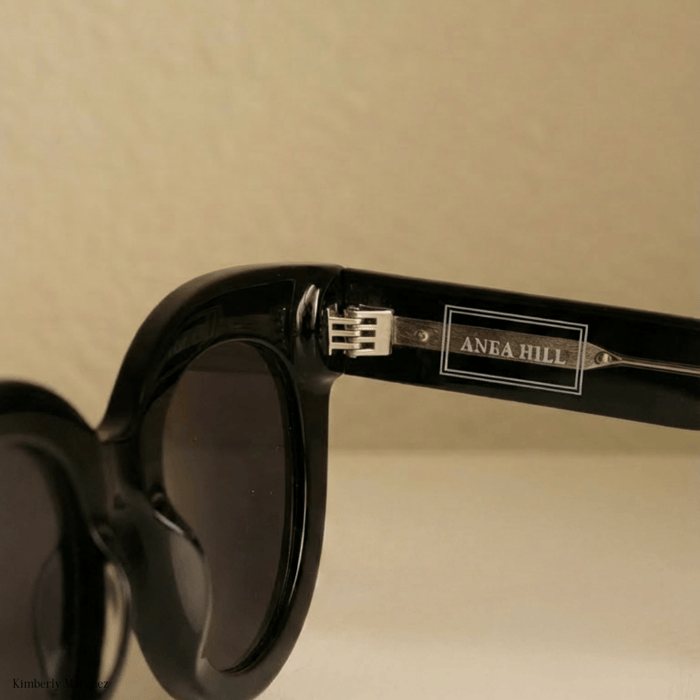 Classic Style Collection
How I Designed Anea Hill to Solve This Problem
When I started designing frames, the headache problem was the first thing I focused on. Not the silhouette. Not the color. The fit.
I spent a significant amount of time understanding why certain frames caused pressure and others did not. What I kept coming back to was that most sunglasses are designed for a standard or larger face with very little consideration for how the frame sits on women with smaller or more delicate features. The result is frames that look right but distribute weight incorrectly from the moment you put them on.
At Anea Hill, we approach frame design around three core principles that directly address sunglasses headaches.
Weight distribution: Every frame is engineered to distribute weight evenly across both the nose bridge and the temple arms simultaneously. No single point of contact carries the full load of the frame. This is what allows our frames to feel present on your face without feeling heavy.
Front to ear arm balance: We check the balance of every frame from the front to the temple arm to ensure there is no forward tipping or backward drag. A frame that tips forward concentrates weight on the nose. A frame that tips backward concentrates pressure behind the ears. True balance means neither happens.
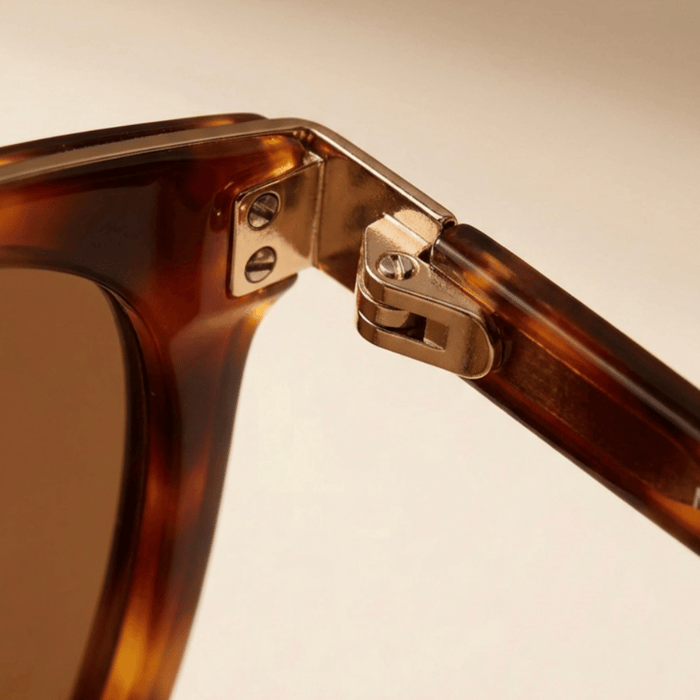
Adjustable acetate construction: This is the piece that makes everything else possible. Every Anea Hill frame is built from premium acetate that can be gently warmed and shaped to your specific face. This means that even if the out of box fit is not perfectly precise for your features, you can adjust the nose bridge width and temple arm angle at home to create a fit that is genuinely yours.
For women who have struggled with sunglasses headaches for years, this adjustability is often the first time they experience a frame that does not require them to choose between looking good and feeling comfortable.
The Anea Hill Fit Checklist
Use this to evaluate any pair of sunglasses for headache risk before committing to daily wear:
| Fit Point | What Good Feels Like | Warning Sign |
|---|---|---|
| Temple width | Light contact, no pressure | Pressing inward or splaying out |
| Temple arm length | Rests gently over ear | Digging in or leaving a gap |
| Nose bridge | Even, light contact | Deep marks after 15 minutes |
| Frame weight | Balanced front to back | Tipping forward or feels heavy |
| Lens clarity | Sharp and undistorted | Colors look slightly off |
| After 2 hours | Forgotten you are wearing them | Any awareness of pressure |
If a pair fails any of these points it will eventually cause discomfort. With adjustable acetate frames, most of these issues can be corrected at home without professional fitting.
Which Styles Are Built for All Day Comfort
Hampton
The Hampton was designed from the beginning with all day wear in mind. The weight distribution across the acetate frame is intentional, the polarized lenses deliver clear undistorted vision, and the adjustable construction means you can shape it to sit precisely on your face without professional help.
Hampton

$288.00
Hampton Polarized Sunglasses by Anea Hill If you are searching for the best sunglasses for women 2026, Hampton is the pair that quietly does it all. Designed as a signature accessory, the Hampton sunglasses combine timeless style with modern performance.… read more
Whisper
Whisper was designed specifically for smaller faces, which means every measurement — the bridge depth, the temple arm length, the overall frame width — was calibrated for features that most frames overlook entirely. For women who have experienced sunglasses headaches because frames were simply too wide or too heavy for their face, Whisper addresses the problem at the design level.
Whisper

$288.00
Whisper is soft in tone, strong in presence. A creamy white frame shaped with Anea Hill’s signature scalloped edge, designed specifically for petite face shapes and a clean, tailored fit. Handcrafted from premium cotton based acetate, each pair is developed… read more
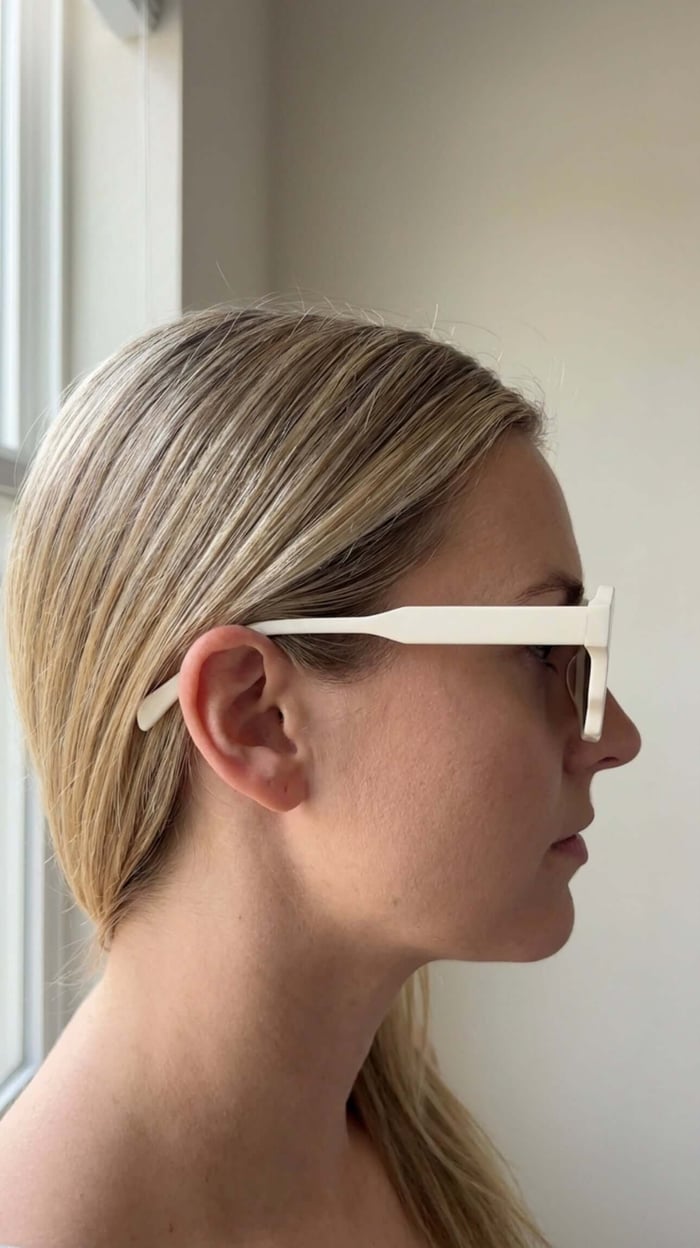 Whisper Sunglasses
Lily
Lily combines the adjustable fit and balanced weight distribution of the Anea Hill construction with a silhouette and color that makes getting dressed feel more considered. For women who want their everyday pair to solve the headache problem without sacrificing personality, Lily delivers both.
Lily

$278.00
Effortlessly chic, endlessly wearable. Lily is the perfect blend of soft purple sophistication and warm brown lenses, offering a modern take on timeless elegance. Designed for all-day comfort with Anea Hill’s signature adjustable fit, these handcrafted sunglasses are as luxurious… read more
How Adjustable Acetate Changes Everything
Most people do not realize that sunglasses can be adjusted at home until they own a pair built from the right material.
Acetate has a natural flexibility that allows it to be gently warmed and reshaped without compromising the structural integrity of the frame. This means that if the nose bridge feels slightly wide or the temple arms are creating mild pressure behind your ears, you can make small, precise adjustments that eliminate the problem entirely.
This is not a workaround. It is a design feature. Building adjustability into every frame means that the fit does not end at the point of sale. It continues until the frame feels genuinely right for your specific face.
For more on why acetate is considered the gold standard in eyewear construction, our post on why acetate sunglasses are the gold standard in luxury eyewear goes deeper into the material science behind it.
And if you have been struggling to find a pair that fits your features consistently, our guide on sunglasses for small faces covers the specific fit challenges that come with smaller features and how to address them.
"I didn’t realize how much fit actually matters until I tried these. They stay in place, feel elevated, and instantly pull an outfit together without trying too hard. Claire M., Verified Customer
Sunglasses headaches are not something you have to accept. They are a fit problem with a design solution. Browse the full Anea Hill collection and find the pair that was built to feel as good as it looks, all day, every day.
FAQs
Why do my sunglasses give me a headache?
Sunglasses headaches are almost always caused by a frame that does not fit correctly. The most common culprits are temple arms that are too narrow and create pressure on the sides of your head, nose bridges that concentrate weight unevenly, or low quality lenses that introduce subtle distortion causing eye strain. According to research, frames that are just 2 to 6 millimeters too narrow can create constant temple pressure that builds into a headache over the course of a few hours. At Anea Hill, every frame is engineered for even weight distribution and built from adjustable acetate so you can shape the fit to your specific face.
How do I stop my sunglasses from giving me headaches?
Start by checking the three main fit points — temple width, temple arm length, and nose bridge contact. If any of these feel slightly off, an adjustable acetate frame can be gently shaped to correct the problem at home. Also check your lens quality. Distorted or low clarity lenses cause eye strain that presents as a headache regardless of how well the frame fits. Polarized lenses with clear undistorted optics eliminate this problem for most wearers.
Are some sunglasses less likely to cause headaches?
Yes. Frames made from adjustable acetate, designed with even weight distribution, and fitted with high quality polarized lenses are significantly less likely to cause headaches than frames built without these considerations. At Anea Hill, preventing sunglasses headaches is built into the design process from the start. Every frame is checked for front to ear arm balance, even weight distribution, and precise nose bridge fit before it reaches a customer.