Table of Contents
Let's be honest. Most of us spend a significant portion of our lives in the car, and yet the one thing that makes that time more comfortable and safer consistently gets treated as an afterthought. The best sunglasses for driving are not the pair you grabbed on the way out the door. They are not the backup pair in your center console. They are a deliberate choice, and once you understand what actually makes a driving lens work, you will never look at it the same way.
This is the breakdown you have been looking for.
Why Your Driving Sunglasses Actually Matter
Glare off the road, glare off the hood of the car in front of you, glare off wet pavement after rain. Any driver knows the feeling of squinting into the sun on a highway and bracing for what is ahead. What most people do not realize is that this level of visual strain affects reaction time in a measurable way. Your eyes are working harder than they should, which means your brain is too.
Poor lens quality compounds this. Lenses with optical distortion, even subtle distortion, force your eyes to constantly adjust and readjust. By the time you reach your destination you are tired in a way that feels bigger than the drive should warrant. If you have ever noticed that some pairs give you a headache after an hour behind the wheel, lens quality is almost always the culprit.
The best sunglasses for driving solve for all of this before you ever pull out of the driveway.
Polarized vs. Non-Polarized: What the Difference Actually Feels Like
Polarized lenses contain a filter that blocks horizontal light waves, which is the specific type of light that creates glare off flat surfaces like roads, hoods, and water. Non-polarized lenses simply reduce the overall brightness coming through without targeting that directional glare.
The practical difference is significant. With polarized lenses, a wet highway goes from blindingly reflective to completely manageable. The road surface sharpens. Contrast improves. You stop squinting. With non-polarized lenses, everything is dimmer but the glare is still there, just softer.
For daytime driving on bright days, polarized is the clear winner. The best sunglasses for driving in full sun will almost always have a polarized lens.
That said, there are situations where non-polarized or clear lenses outperform polarized. Digital dashboards and certain GPS screens can appear washed out or difficult to read through a polarized lens. If you drive a vehicle with a heads-up display, this is worth knowing before you commit to a fully polarized pair.
When to Reach for a Different Lens
Driving at dusk or in heavy rain is where polarized lenses show their limits. These conditions call for lenses that prioritize light transmission over glare reduction. Amber and yellow tinted lenses excel here because they enhance contrast and depth perception in low and variable light without darkening the road further.
Here is a quick breakdown by condition:
- Bright daytime sun: Gray polarized lens. True color perception, maximum glare reduction, and no visual fatigue
- Partly cloudy or variable light: Brown or amber lens. Enhances contrast and performs well as light shifts throughout the day
- Dusk, fog, or overcast: Yellow tinted lens. Improves depth perception and reduces the flat, washed out quality of low light
- Night driving: Clear or lightly tinted anti-glare lens. Polarized lenses are not recommended after dark as they reduce light transmission and can affect safety
For most women, a quality gray polarized pair covers the majority of driving situations beautifully. The specialty tints are worth knowing about but are rarely a daily necessity.
Frame Fit Is Not a Style Question, It Is a Safety One
This is the part of the conversation that almost never comes up. Frame fit directly affects how well your driving sunglasses perform. A pair that slides down your nose mid-drive is not just annoying. It is a distraction. A frame that sits too low cuts off your downward field of vision. One that is too wide creates peripheral gaps that defeat the whole point of wearing protection.
The best sunglasses for driving sit flush to the brow, cover the full visual field, and stay exactly where you put them without any adjustment for the duration of the drive.
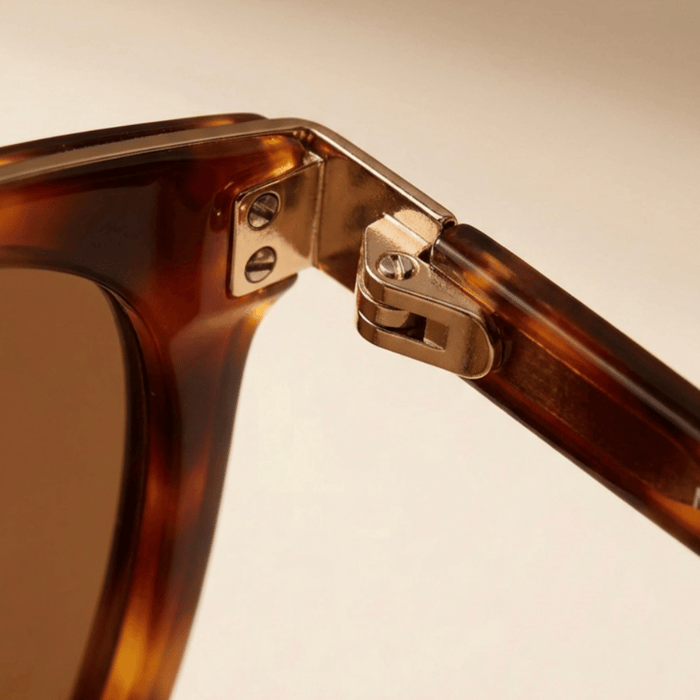
At ANEA HILL, every frame is crafted from Japanese cellulose acetate that can be gently shaped to your face. This means you can adjust the bridge depth and temple arm angle to create a fit precise enough that you simply forget you are wearing them. That level of stability matters more behind the wheel than almost anywhere else.
The ANEA HILL Styles Built for Driving
Knowing what to look for is one thing. Having a frame that checks every box is another. Here are four styles worth knowing.
Lonestar is a classic silhouette with a lens size that offers full coverage without feeling heavy. The acetate construction keeps the weight balanced from front to back, which means no temple pressure on long drives. One of the best sunglasses for driving if you want something that reads as polished as it performs.
Lonestar

$405.00
Enter Lonestar, your trusty Texan Sunglasses. These shades aren't just a fashion statement; they're a classic love letter to Texas. With polarized lenses, they've got your back under the blazing sun, whether you're at a barbecue, rodeo, or just kicking… read more
Aspen is slightly oversized with a wider lens that delivers exceptional coverage. Designed with smaller faces in mind so the fit is precise rather than borrowed. If you have ever dealt with frames that sit too wide and let light in from the sides, the Aspen solves that immediately.
Aspen

$405.00
Aspen is our newest oversized cat eye and the sister silhouette to The One. Designed in a refined multicolor acetate this frame brings a playful yet polished energy to a timeless shape. The fit is confident flattering and ideal for… read more
Tahoe is our newest style and brings a refined, modern edge to the lineup. A polarized lens and an adjustable fit make it as practical as it is beautiful. It is the kind of frame that transitions seamlessly from the front seat to the rest of your day without missing a beat.
Tahoe

$390.00
A statement in motion, Tahoe captures the feeling of light dancing across water at golden hour. Designed in a refined, thinner silhouette, this frame brings a lighter touch to one of ANEA HILL’s most loved shapes. The confetti-inspired acetate blends… read more
Hampton is the everyday workhorse of the collection. A timeless shape, polarized lens, UV400 protection built directly into the lens material, and a fit that works across a wide range of face shapes. If you want one pair that handles driving, errands, and everything in between, this is it.
Hampton

$420.00
Hampton Polarized Sunglasses by Anea Hill If you are searching for the best sunglasses for women 2026, Hampton is the pair that quietly does it all. Designed as a signature accessory, the Hampton sunglasses combine timeless style with modern performance.… read more
All four are built with UV400 protection integrated into the lens itself, not applied as a surface coating. That distinction matters because coated protection degrades over time. Built-in protection does not. For the kind of everyday use that includes daily driving, that is the standard worth insisting on.
What to Look for When You Shop
If you are shopping beyond ANEA HILL, here is the non-negotiable checklist for the best sunglasses for driving:
- Polarized lenses for daytime sun
- UV400 protection built into the lens material
- A frame that sits flush to the brow with minimal peripheral gaps
- Lightweight construction that stays balanced over long wear
- Adjustable fit so the frame does not slide or shift mid-drive
- Gray or brown tint for accurate color and contrast on the road
Style absolutely matters. Your driving sunglasses should feel like a natural extension of how you present yourself, not a compromise. The good news is that you no longer have to choose between a frame that performs and one that feels like you. The best sunglasses for driving can be both.
FAQs
Are polarized sunglasses always the best choice for driving?
Polarized lenses are the best choice for most daytime driving conditions because they eliminate horizontal glare off road surfaces and wet pavement. However, they are not recommended for night driving, heavy rain at dusk, or vehicles with digital dashboard displays that may appear washed out through a polarized filter. For the majority of drivers, a quality gray polarized lens covers most situations beautifully.
What lens tint is best for driving in different conditions?
Gray lenses are ideal for bright sunny days because they provide true color perception and strong glare reduction. Brown and amber tints work well in variable or partly cloudy light because they enhance contrast and depth perception. Yellow lenses are best for dusk, fog, or overcast conditions where a standard tinted lens would darken the road too much. Clear or lightly tinted anti-glare lenses are the right choice for night driving.
Does frame fit really matter for driving sunglasses?
It matters more than most people realize. A frame that slides, sits too low, or leaves gaps at the sides creates distractions and reduces the protective coverage of the lens. The best sunglasses for driving sit flush to the brow, stay in place without adjustment, and provide full coverage of your visual field. At ANEA HILL, the adjustable Japanese cellulose acetate frames can be shaped to your face for exactly this kind of precise, stable fit.